


Climate summit collapses as oil states block fossil fuel phaseout
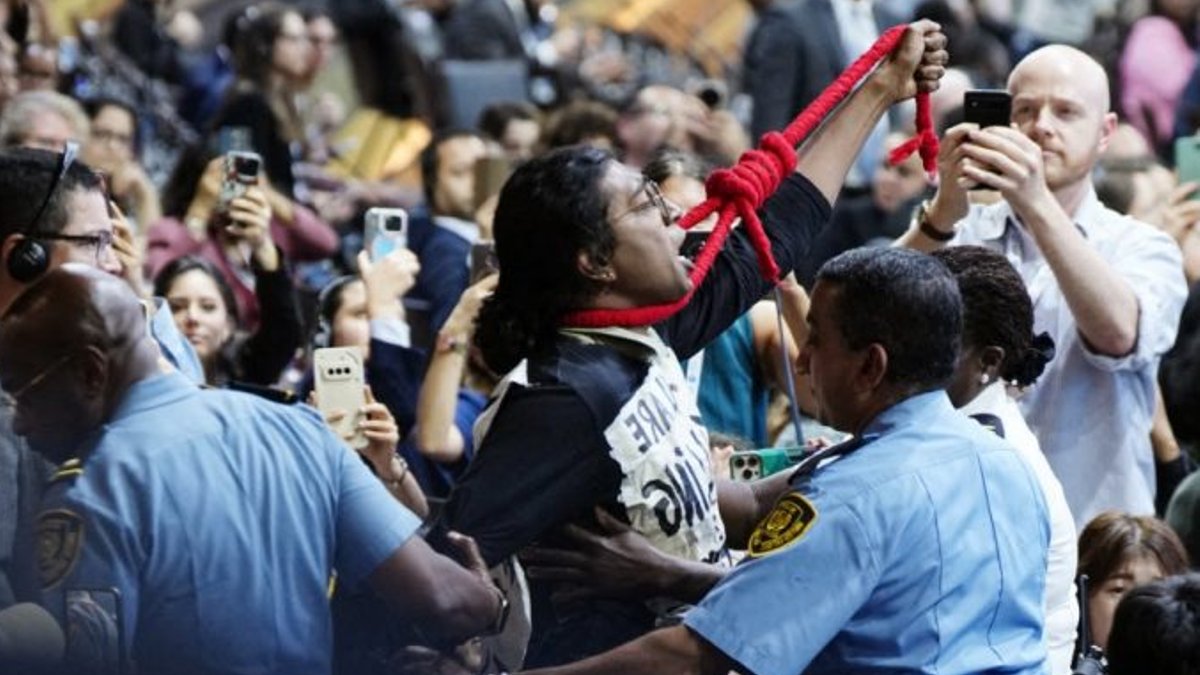
The COP31 climate summit in Antalya, Turkey, ended in failure on Sunday after negotiators clashed over fossil fuels, marking the longest climate summit ever and deepening frustration over stalled global efforts. The breakdown occurred two days past the original deadline, with climate advocates accusing petrostates of blocking any mention of oil, gas, and coal in the final agreement. The EU, Ireland, Panama, Vanuatu, and the Marshall Islands rejected a diluted text that omitted phaseout commitments. Ireland’s climate minister, Darragh O’Brien, condemned the outcome as a “greenwash” of fossil fuel dependence.
UN Secretary-General Antonio Guterres, who had urged nations to send fossil fuels “the way of the dinosaurs,” expressed deep disappointment. “I share the very profound frustration of all those who expected governments to rise to the moment the climate crisis demands,” the outgoing UN chief said in a statement. The divide between nations pushing for urgent climate action and those resisting fossil fuel restrictions widened further. Australia’s climate minister, Chris Bowen, admitted that “unbridgeable red lines” prevented progress. Bowen, co-chairing the summit with Turkey, had sought a “cover decision” to show unity, but oil-producing states rejected even indirect criticism. The final gavel struck at 5:30 a.m. local time, leaving no binding agreement.
This was not the first time climate talks had collapsed over fossil fuels. The 2009 Copenhagen summit also failed to reach a deal, and the current stalemate risks further damaging trust in the COP process. Some nations, including the UK and Ireland, have already signaled they will push for stronger action outside official negotiations. Around 60 countries participated in an April conference focused on phasing out fossil fuels, demonstrating that momentum for change persists despite diplomatic deadlock.
Finance and science sidelined in talks
The Intergovernmental Panel on Climate Change (IPCC) warnings on emissions were weakened in favor of vague language, leaving delegates disillusioned. The collapse occurred as global temperatures continue rising, with scientists warning the world may overshoot the 1.5°C Paris Agreement target within years. The summit’s inability to address fossil fuels directly highlights the difficulty of reconciling economic interests with climate science amid geopolitical tensions.
In a last-ditch bid for compromise, COP31 co-hosts Turkey and Australia could only muster a veiled reference to fossil fuels in the final text. But the pact also took fire for retaining a call to expand carbon capture – a costly technology championed by the fossil fuel industry that critics say is expensive and offers limited impact. “We believe that climate change requires all solutions on the table,” said Mohammad Ayoub, a climate negotiator for oil giant Saudi Arabia.
Facing blowback over the fossil fuels omission, the co-host nations tried to rally support behind a global goal to electrify the world economy. They said “electrification” could cut heat-trapping emissions and bolster energy security but the target was ultimately torpedoed, along with the rest of the doomed Antalya Pact.
Markets crash amid AI and trade fears
While climate talks faltered, Asian markets faced their worst week in five years. Tech stocks led the decline due to concerns over AI investment, tighter US regulation, and expectations of higher interest rates. Nvidia, a key player in the AI boom, dropped 14% in a single day, pulling the Nasdaq into negative territory for the year. The downturn spread to Asia, where Seoul’s Kospi index fell 3.3% and Hong Kong’s Hang Seng dipped 0.1%. Only Taiwan saw gains, as authorities tightened short-selling rules to stabilize markets.
The VIX Index, a measure of market fear, spiked to its highest level since April 2023, reflecting investor unease. The rout followed a US Commerce Department decision to close a loophole allowing Chinese firms to access Nvidia’s AI chips remotely, adding to sector uncertainty. As trading resumed in Asia, West Texas Intermediate crude held at $83.34 per barrel, while Brent crude dipped to $92.39. The dollar-yen exchange rate rose to 158.98 yen, showing currency volatility as central banks in Japan and the US pursued divergent monetary policies.
The COP31 collapse left Turkish officials scrambling to manage the diplomatic fallout. Turkish Environment Minister Murat Kurum held an emergency press conference to address the breakdown. Delegates described the final hours as chaotic, with some walking out before the gavel fell. The final text included only vague references to “low-emission technologies,” which even moderate delegations dismissed as meaningless without concrete commitments.
Petrostates blamed as COP trust erodes
Australia’s Prime Minister Anthony Albanese attributed the failure to “difficult geopolitical times,” citing the war in Gaza and rising energy prices as obstacles to consensus. Climate activists, however, accused petrostates of exploiting the crisis to block progress. Former US Vice President Al Gore said the process was “in need of significant reform” on X, as most countries sought “to move forward in good faith.” The EU’s climate envoy, Wopke Hoekstra, agreed, saying the summit had “lost its way” by prioritizing diplomacy over scientific urgency. Small island nations like Vanuatu and the Marshall Islands threatened to bypass COP entirely, announcing plans to pursue legal action against fossil fuel producers under international law.
The $120 billion climate finance demand from developing nations, first raised at COP28, was entirely absent from the final text. This omission came despite extreme weather events in 2024 costing Africa and Asia an estimated $150 billion in damages. Wealthy nations had already failed to meet the $100 billion annual pledge made at COP21 in 2015. A side event hosted by the African Group of Negotiators highlighted how climate disasters were worsening food insecurity, with droughts in the Horn of Africa and floods in Pakistan displacing millions. The Antalya Pact made no mention of scaling up adaptation funds or loss-and-damage reparations, leaving vulnerable states to address the crisis alone.
Scientific warnings from the IPCC were further diluted in the final draft. The IPCC’s 2023 synthesis report had warned that current pledges would lead to 2.5–2.9°C warming by 2100—far exceeding the Paris Agreement’s aspirational limit.


