


Xreal Aura AR glasses blend digital and real worlds
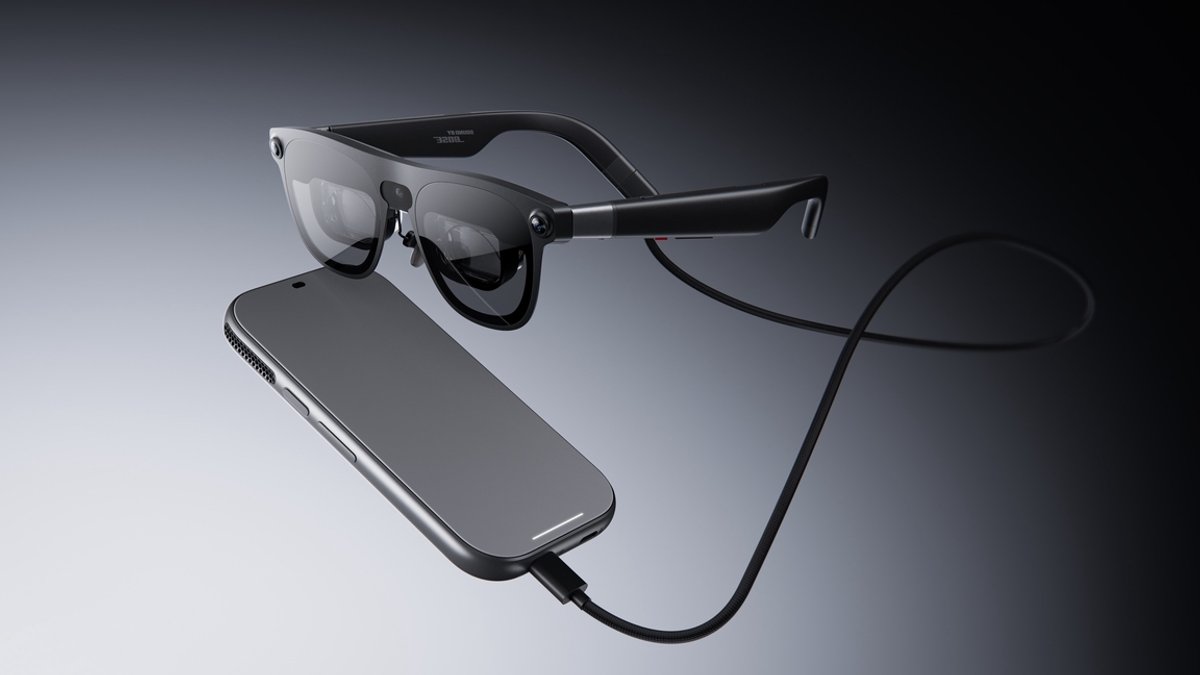
A new pair of Xreal Aura glasses merges virtual and physical environments, though their design forces users to choose between convenience and functionality. Unlike Samsung’s Galaxy XR, which immerses users in a fully digital world, the Aura overlays digital displays onto reality. Both devices, however, depend on external hardware to operate effectively.
Two Devices, Two Distinct Experiences
The Xreal Aura features transparent lenses that can show up to five floating windows, allowing users to engage with Android XR applications, mirror laptop displays, and manage devices through voice or gesture commands. During a demonstration in Seoul, attendees saw a writer manipulate virtual screens in midair, while another viewer experienced a 3D seascape and concert footage with surprising depth. In contrast, the Galaxy XR completely replaces the physical world with a 360-degree digital environment, offering a different kind of immersion.
Read Also: China’s Record Exports Spark Global Trade Tensions
Xreal’s 1 Pro+ AR glasses, by comparison, enhance existing content rather than creating standalone virtual spaces. They take input from phones, laptops, or gaming devices and project it as a larger, more engaging screen. The demonstration highlighted improved brightness—reaching up to 1,200 nits in certain modes—and smoother 60 FPS real-time 3D conversion. Still, the effect remained closer to watching a larger television than stepping into a fully immersive experience.
A Lighter Design, but Still Constrained
Weighing just 95 grams, the Aura is far lighter than the Galaxy XR’s 545 grams, making it more comfortable for brief use. Its transparent design avoids the enclosed feel of fully immersive headsets, but the thick lenses and bulky frame still give it a technological rather than stylish appearance. The trade-off comes with the device’s main processor and battery housed in a separate, wired compute puck, mirroring the Galaxy XR’s reliance on external power, though in this case, the processing unit is external rather than integrated.
Starting at 1.69 million won ($1,270) for the base model, with a premium version priced at 1.99 million won, the Aura is 1 million won cheaper than the Galaxy XR’s original launch price. Discounts are available until December, and sales in Korea began on Friday, with shipments expected by late November.
Read Also: China’s EV industry faces profit drop and export boom
Xreal CEO Chi Xu described the launch as a move toward spatial computing, tools that enhance reality without cutting users off from their surroundings. However, the requirement for an external device weakens that vision. The 1 Pro+, priced at $599 globally, sidesteps this issue by offloading processing to a connected screen, though it lacks standalone applications, limiting its versatility.
Enhanced Visuals, but Limited Functionality
Samsung’s Galaxy XR maintains an advantage in display sharpness, offering 3,552 × 3,840 pixels per eye compared to the Aura’s 1,920 × 1,200. Yet the Aura’s lighter weight and transparent design make it more suitable for mixed-reality tasks, provided users can accept the wired compute puck. The 1 Pro+, while less transformative, provides a simpler way to upgrade existing content without the bulk of a full headset.


