


New mural in Byappanahalli tackles drug issue
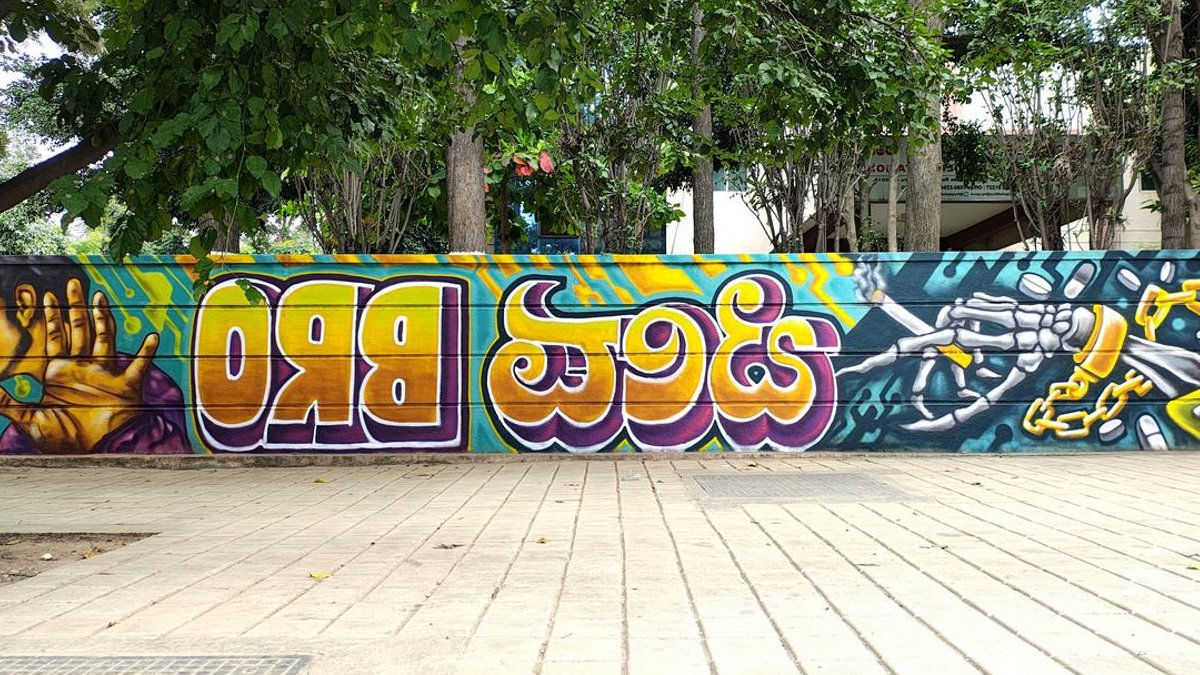
A new mural in Bengaluru aims to curb drug abuse through visual storytelling, drawing inspiration from street art seen during a trip to Belgium.
Art as a warning on Old Madras Road
Talking Walls, a brand-new mural at the Baiyappanahalli Police Station, faces the busy Old Madras Road. The artwork focuses on raising awareness about drug abuse. It brings to life the anguish of the drug menace while enhancing the city’s visual richness.
Rotary E-Club of Bangalore director Nivedita Dutt visited Ghent, Belgium, a few years ago. She encountered an alley full of graffiti on both sides and described it as fabulous. Coming back to India, she felt the city could also use similar street art. In 2024, the club collaborated with the Karnataka Police to create “Graffiti for Hope” near the Adugodi Police Station. The focus was on women abuse, cybercrime, and drug abuse.
According to a press release from the Rotary E-Club of Bengaluru, the recent mural in Baiyappanahalli was executed by Kolkata-based artist Sayam Porey. It is supported by the club, the Bengaluru City Police, and the Banna Paint Company.
Related: Modi Naidu Celebrate Pawan Kalyan’s 55th Birthday
Sayam painted a variety of objects on the wall. Bright swathes of color form the background, including sunshine, turquoise, and magenta. The artwork features the Bengaluru City Police logo, a pair of handcuffed hands, a large syringe, an eye, a chained skeleton, and the Rotary E-club of Bengaluru motif.
Interspersed are graffiti in both English and Kannada. The words “Beda Bro” appear frequently, which is an appeal not to take drugs. The project is part of a police initiative titled Beda Bro, aimed at stopping the drug menace by 2028.
Rotary E-Club director Ashis Dutta believes a human being is more open to accepting a message depicted on a wall than on a billboard. He contrasts this with a commercial message, where a person consciously knows someone is trying to sell them something.
Changing perceptions through color
Sayam Porey identifies as a graffiti writer. He notes that many people often refer to graffiti artists as criminals, thinking of their work as vandalism. However, he is the first graffiti artist to paint on a police wall in Bengaluru. He hopes this collaboration will change people’s perception of graffiti.
Related: India struggles to extend childhood cancer care
By using street art to drive an important message, Sayam believes it changes minds. He recalls that passersby often appreciated him while he worked on the wall.
The initiative is designed to scale up. The goal is to have more clubs join in and extend to around 50 walls in the city. The group intends to collaborate with other stakeholders, including police and administrative officials, to achieve this.
This approach to public messaging mirrors similar tactics seen in urban planning, where physical barriers and visual cues are used to alter behavior in shared spaces. While previous efforts have focused on physical fencing or barriers, this project uses a more inviting aesthetic to encourage a different kind of engagement with the problem.
The focus of the expansion will depend on the other stakeholders involved in the collaboration. The project remains a partnership between the local police, the Rotary E-club, and the artist.

Modi Naidu Celebrate Pawan Kalyan's 55th Birthday


