


Nepal floods leave dozens dead and hundreds missing
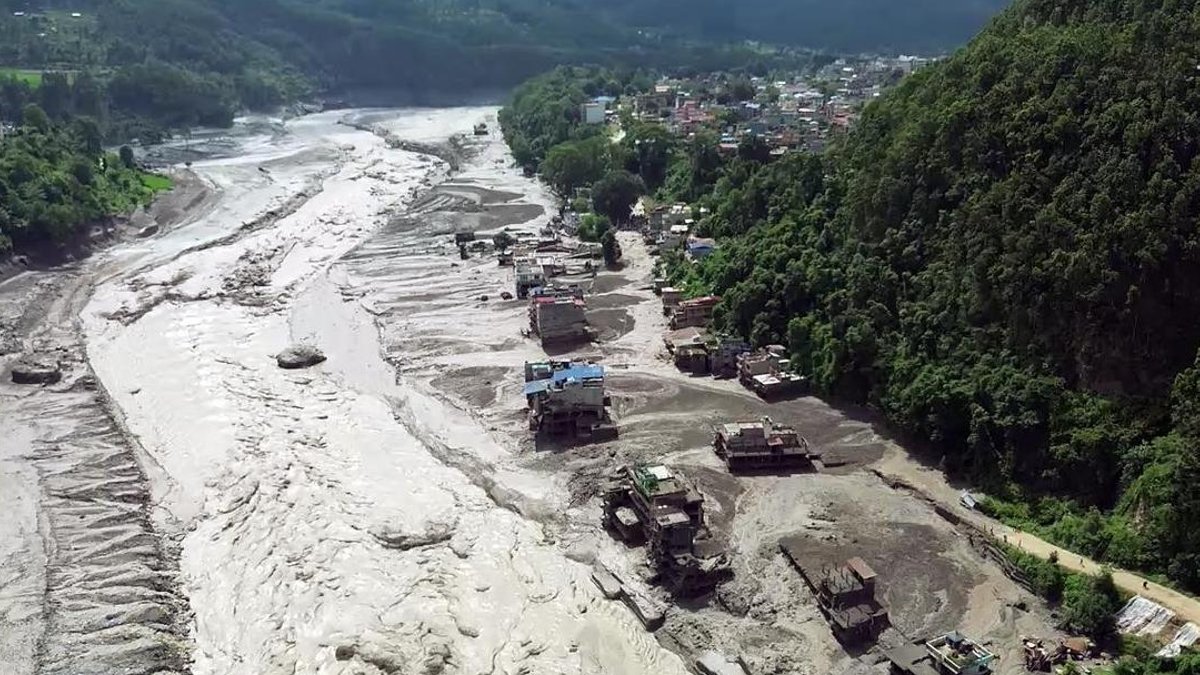
A flash flood surged through Nepal’s Rasuwa and Dhading districts early Wednesday, killing at least nine people and leaving 384 missing, including 291 foreign nationals. The disaster struck around 9 a.m. local time, devastating settlements along the Bhote Koshi River, which originates in Tibet.
The flood damaged roads, bridges, and at least a dozen hydropower projects. Officials said the exact cause—possibly a glacial lake outburst or avalanche—remains unclear. Villages in Rasuwa, including Syapru Besi and Timure, were among the hardest hit, with entire communities washed away.
Hundreds missing, including foreign tourists
The Nepal Tourism Board reported 384 travelers unaccounted for. Of those, 291 are foreigners, while 93 are Nepali nationals. Among the missing are 105 Indian tourists, 37 non-resident Indians, and visitors from the U.S., Malaysia, the U.K., South Africa, Australia, and the Netherlands.
Emergency hotlines have been set up, including a toll-free number (1234) and a tourist police line (9851289445).
Hydropower projects damaged
The flood destroyed at least a dozen hydropower projects. Officials said the flooding likely originated from Tibet, possibly due to a glacial lake outburst or avalanche. Investigations continue.
Local authorities warned residents in Rasuwa, Nuwakot, Dhading, Chitwan, and Gorkha districts to stay on high alert. The National Disaster Risk Reduction and Management Authority noted the risk of further flooding from the Tibetan side has not subsided.
The Nepal Army established a treatment center at the Military Training Centre No. 1 in Trishuli. Medical teams there provide emergency care.
Related: Trioworld earns recycled plastics milestone in North America
For those stranded, the disaster turned a routine journey into a nightmare. Many were pilgrims or tourists traveling through the region when floodwaters hit, cutting off escape routes. Landslides later blocked key roads, making rescues harder.
Uncertainty over cause and future risks
Dinkar Kayastha, an information officer at Nepal’s Department of Hydrology and Meteorology, said the flood may have been triggered by a new glacier formation or the collapse of an existing one. He added that the real cause is still unknown.
The Bhote Koshi River flows into Nepal’s Trishuli River before entering India as the Gandak. Officials have not ruled out another surge, leaving downstream communities on edge.
In Rasuwa, settlements—including Syapru Besi, Betrawati, and Timure—were severely affected. Floodwaters swept away homes, vehicles, and livestock, leaving debris behind.
Rescue teams search through wreckage, but destroyed roads and bridges limit access. The army warned the full scale of the disaster may not be clear for days.
Officials continue monitoring the situation as they assess whether upstream changes in glacial activity contributed to the flood.

Manipur waits on Delhi for Census amid Meitei, Naga demands


