


Review of Josy Joseph’s Birth of a Nation
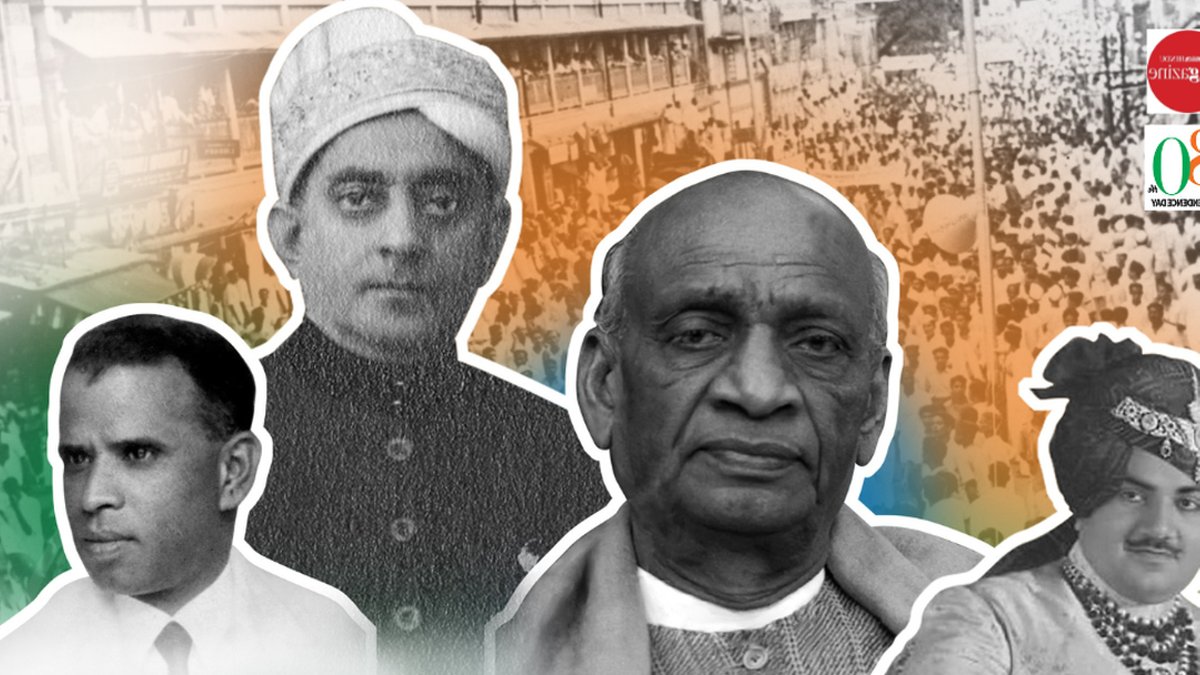
India’s independence is often remembered as a triumph of nonviolent resistance, a story of mass movements and towering leaders. But the reality, as journalist Josy Joseph reveals in Birth of a Nation: The Twenty-One Days That Made India, was far messier—shaped by bureaucrats, spies, and princely rulers racing against time to hold the country together.
The book zeroes in on the frenetic period between July 25 and August 14, 1947, when the fate of the subcontinent hung in the balance. Joseph and his research team spent a decade piecing together declassified State Department records, royal archives, and MI5 files to reconstruct those 21 days. What emerges is less a grand march toward freedom and more a high-stakes negotiation, where the threat of Balkanization loomed over every decision.
Freedom, in the summer of 1947, had at least three competing definitions. The Indian National Congress pushed for a unified republic. The Muslim League demanded an independent Pakistan. And the princely states—a third, often overlooked force—sought to remain sovereign, answerable to neither. Ideology bent easily when power was at stake. Even bitter rivals like the Hindu Mahasabha and the Muslim League found common ground in supporting the princes’ right to resist integration.
Related: Hyderabad police step up security for Milad procession
Behind the public ceremonies and flag-hoisting, a quieter battle unfolded. Sir Conrad Corfield, private secretary to the Viceroy, ordered the destruction of confidential files containing the princes’ secrets, his final act to shield his old clients from the new government. Opposing him was the newly formed States Department, led by Sardar Vallabhbhai Patel and V.P. Menon, who worked to coax, cajole, and, when necessary, confront the rulers into accession. Menon, a former mine worker turned constitutional adviser, understood that demanding everything would backfire. Instead, he asked for almost nothing—just control over defense, external affairs, and communications—leaving the princes’ wealth and internal rule intact.
These shadow players rarely make it into the standard narratives of 1947, which focus on Gandhi’s nonviolent movement and the towering personalities of the era. Joseph’s book pulls them into the light, showing how the republic was built not just by speeches and protests, but by backroom deals and last-minute compromises.
Defiance in many forms
The resistance to integration took different shapes across the subcontinent. In Hyderabad, a state larger than England and Scotland combined, the sheer scale of its potential independence could have redrawn the map. Junagadh’s Dewan publicly flirted with Delhi while secretly signing accession papers with Pakistan, a betrayal revealed only on the morning of August 15. In Jodhpur, the Maharaja pulled a pen-pistol on Menon before ultimately accepting India’s terms over Jinnah’s. And in Travancore, an assassination attempt on Dewan C.P. Ramaswami Aiyar derailed a sovereignty project that had seemed unstoppable just weeks earlier.
Related: Paladin expands into data centre security market
The Northeast carried its own unresolved tensions. A Naga accord collapsed almost immediately, while Tripura absorbed refugees even as its own political future remained uncertain. As Joseph writes, “India was being born amid unfinished arguments. The princes were still bargaining for privilege, the provinces were already bleeding, the hill peoples were demanding to be heard before being absorbed.”
At midnight on August 14, the mood was divided. Some celebrated in the streets; others hid behind shuttered doors. Joy and fear coexisted. The incompleteness of the moment was stark. Minutes after Nehru delivered his “tryst with destiny” speech, Lord Mountbatten opened an envelope expecting the new cabinet’s names. Inside was only a blank sheet of paper—a republic still waiting to take shape.
This tension between centralization and citizenship didn’t vanish with the princes. The reflex to govern subjects rather than empower citizens has persisted, surfacing in moments like the recent police crackdowns on student protests. The book’s real insight isn’t just how India was built, but how easily the foundations of a republic can erode when the work of democracy is left unfinished.
Related: AI agent risks increase insurers’ hidden liability
For those who lived through those 21 days, the choices must have felt like threading a needle in a hurricane. The bureaucrats and negotiators who kept the country from splintering didn’t have the luxury of idealism. They had to work with what was in front of them—princely egos, colonial legacies, and the looming specter of partition. Their success wasn’t guaranteed, and their methods weren’t always clean. But without them, the India we recognize today might not exist at all.
The thrones are gone, but the instincts that built them remain. A republic, as Joseph reminds us, is never a finished project. It’s a daily negotiation—one that requires understanding not just where we’ve been, but how we got here in the first place.

Hyderabad police step up security for Milad procession


